Espoo, Finland, June 2026 — As Europe accelerates its green and digital transitions, one question is becoming increasingly important: how can we ensure that the raw materials powering batteries, renewable energy technologies, and advanced manufacturing are sourced responsibly and transparently?
Answering that question requires more than data and innovative solutions. It requires trust, cooperation, and the ability to trace materials across increasingly complex global supply chains. The growing importance of traceability is also reflected at the highest policy levels. In June 2026, G7 leaders highlighted the need for more secure, transparent, and resilient critical mineral supply chains, including improved traceability and trusted information-sharing mechanisms. At the same time, mining countries such as Australia and Canada are exploring the implementation of “proof of origin” systems for materials mined within their jurisdictions.
In this rapidly evolving context, MaDiTraCe, an EU-funded project coordinated by BRGM, has spent the past three years exploring innovative approaches to raw materials traceability. By combining digital solutions, governance frameworks, material fingerprinting, Digital Product Passport (DPP) technologies, and stakeholder engagement, the project has sought to strengthen transparency and responsible sourcing practices throughout critical raw materials value chains and support future traceability and provenance systems in Europe and beyond.
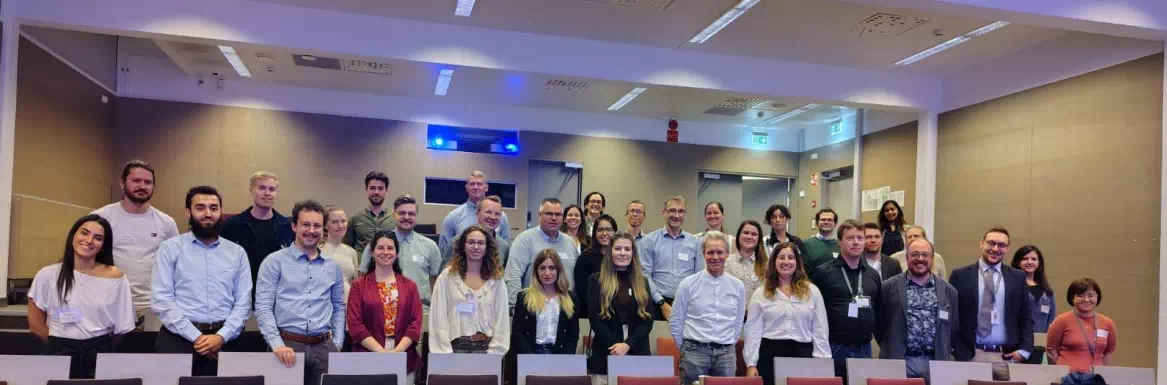
On 10–11 June, project partners, policymakers, industry representatives, researchers, and international experts gathered in Espoo, Finland, for the MaDiTraCe Final Event and General Assembly. Hosted by GTK and Metso, the event provided an opportunity not only to reflect on the project's achievements but also to discuss the future of traceability in Europe and beyond.

The MaDiTraCe consortium gathered in Espoo, Finland, to reflect on the project's achievements and discuss the future of traceability in Europe's raw materials value chains.
Throughout the two-day programme, a common theme emerged: traceability is not the final objective. Traceability is a technical tool for supply chain risk monitoring. It is increasingly seen as a strategic enabler of sustainability, resilience, and trust.
Among the event's keynote speakers was Dr Susanne Guth-Orlowski, Digital Product Passport pioneer, CEO of 4TheRecord, and Lead Author of UN/CEFACT Recommendation 49. Her presentation explored international developments in Digital Product Passports and highlighted the growing need for interoperable systems capable of supporting trusted information exchange across value chains.
James Hermanson, Advisor in the Director's Office at OECD Global Relations, brought a global perspective to the conversation, outlining ongoing international efforts to strengthen traceability and responsible sourcing practices in raw materials supply chains. But a realism would be necessary, not all the supply chains are exposed to the same degree of risks.
The event also featured contributions from invited experts Jana Plananska, Advisor in Business Development and Public Affairs for Critical Raw Materials and Clean Mobility, and Tom Van Bellinghen, Founder of Lithink. Their insights helped frame discussions around Europe's evolving raw materials landscape and the opportunities and challenges associated with scaling traceability solutions across sectors, borders, and industries.

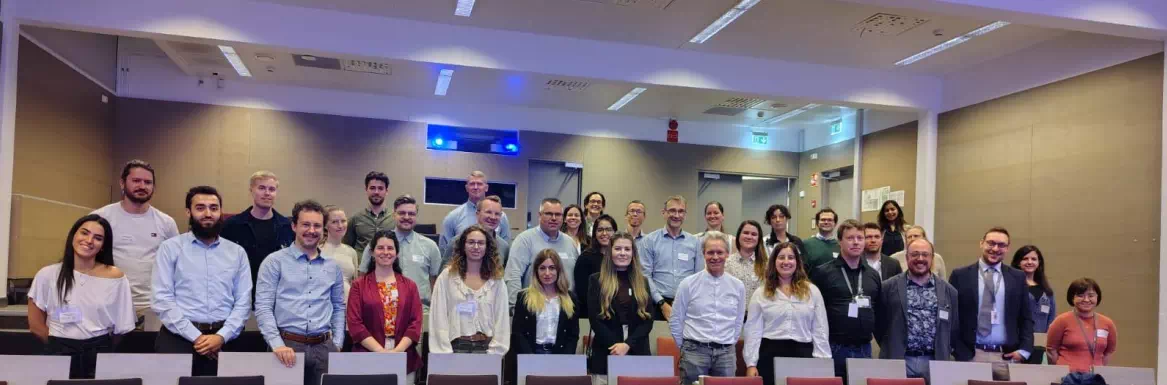
Discussions during the MaDiTraCe Final Event highlighted the importance of interoperability, governance, and responsible sourcing in future traceability systems.
While the discussions covered a broad range of topics—from Digital Product Passports and certification schemes to material fingerprinting and supply chain mapping—the conversations held in Espoo made one thing clear: the future of traceability will not be built by technology alone. It will depend on interoperability, governance, collaboration, trust, and a shared commitment to responsible sourcing.
Beyond the conference sessions, participants visited GTK's laboratories and museum, as well as Metso's facilities, gaining firsthand insight into the scientific expertise and technological innovation supporting the next generation of traceability solutions.
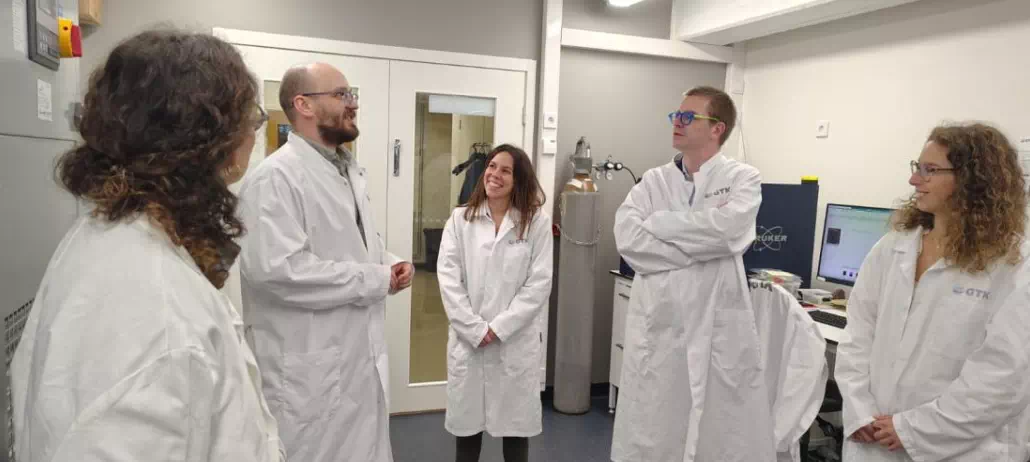
A visit to GTK's laboratories offered participants a closer look at the research and technologies underpinning innovative traceability approaches for critical raw materials.
While the project is approaching its conclusion, its work is far from over. Over the coming months, technical results, recommendations, publications, and practical tools will continue to be released through the MaDiTraCe website and open-access platforms such as Zenodo. As it enters its final dissemination phase, MaDiTraCe leaves behind more than a set of project outputs: it leaves a shared vision for the future of traceability—one built on interoperability, trusted governance, and responsible sourcing—and a growing community working to make transparency and sustainability a reality across Europe's raw materials value chains.
For further information, project results, and media enquiries, visit: www.maditrace.eu ; contact@maditrace.eu